

What makes me stressed?
Being scammed can be extremely stressful! Watch here to spot the scams!



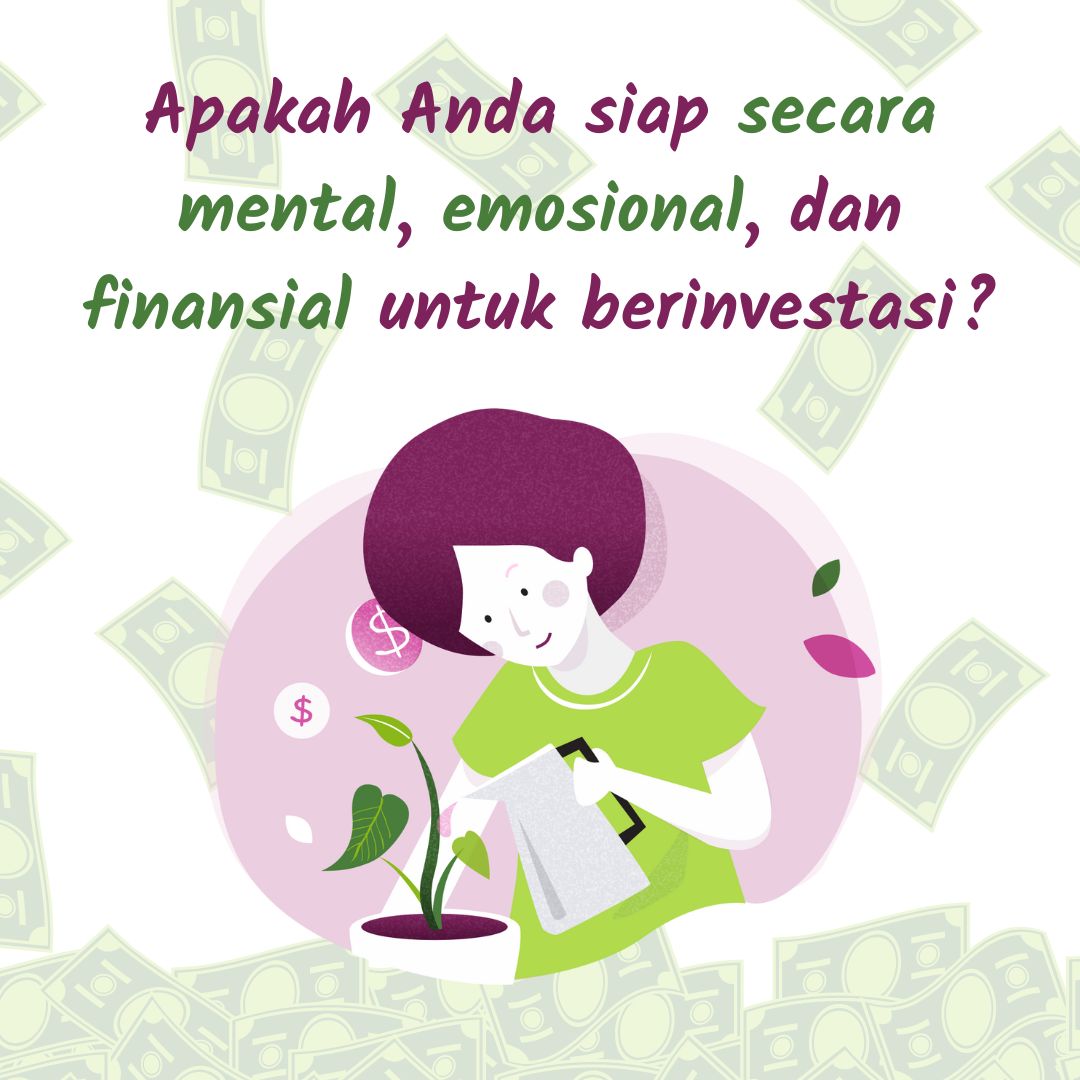





Am I mentally, emotionally, and financially prepared to invest?
If you are offered a very attractive investment or business opportunity, what would you do? Would you jump right into it?
Remember, our impulsive decisions may have an impact on our mental health later on. It is best to understand any investment or business opportunity before committing to any.
Watch here to see if you are fit to start your investment!
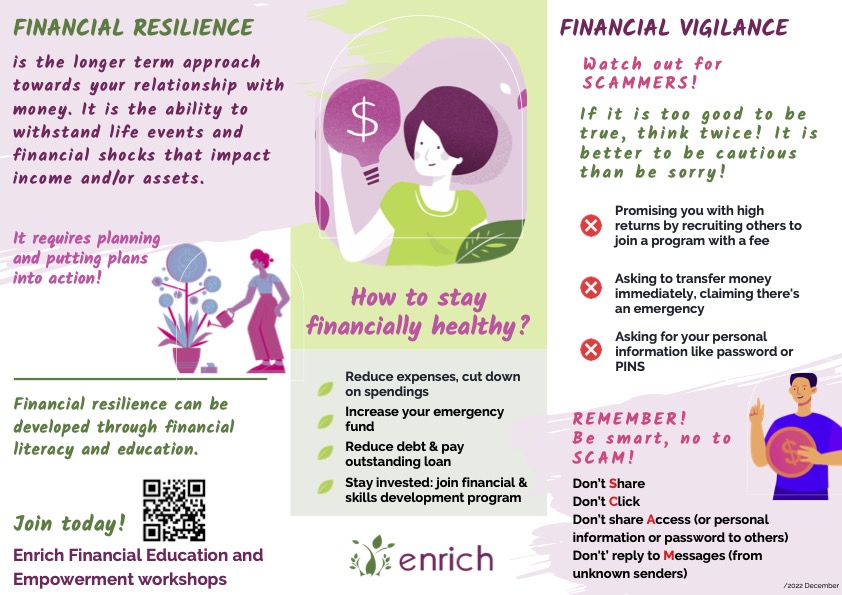
How to improve my financial wellness?
“How you feel is your wellness; how you feel about your money is your financial wellness”.
There are days where you feel confident that you have enough money to support your needs and wants, but there are also some days that you feel that you don’t have enough finances to make ends meet.
Here are some tips that can help you improve or keep your financial condition healthy:
- Understand where your money goes. Create and track your budget!
- Avoid or limit your debts. Pay your debts on time!
- Be clear on what you want to accomplish
- List, quantify, and prioritise your goals
- Take achievable steps
- Ask if your goals are realistic
- Give yourself a time frame to achieve your goals
- Save money on a regular basis. Be consistent!
- Fund your emergency cash
- Talk to your family about your finances and financial goals
- Seek financial help, if necessary
How to stay financially healthy? Download here.
How do I know that I am financially healthy?
Are you financially resilient enough to withstand financial pressures and emergencies?
Do you find yourself in a difficult debt situation?
Just as you regularly monitor your physical condition, you also need to check your financial health, how you are managing your money, or whether you are on track in achieving your financial goals.
Financial health gauge
If you answer "no" to more than two of the following questions, this may mean updating or improving your financial goals, spending habits, and overall approach to your finances.
- Do you have little or no debt?
- Do you know where your money goes: do you have a budget?
- Do you pay your bills on time?
- Do you have an adequate emergency fund: is funded by at least 3-month worth of your salary?
- Do you have a financial plan: short-term plan, medium-term plan and/or long-term plan?
- Does your savings grow every year?
- Do you build your financial and emotional knowledge: do attend financial education and skills training workshops?
What is financial resilience?
Financial resilience is the longer term approach towards your relationship with money. It is the ability to withstand life events and financial shocks that impact one’s income and/or assets. Events such as job loss, unexpected illness, and the COVID-19 outbreak all have a significant impact on an individual or household’s finances.
Coping with financial shocks and hardships means having the skills and resources to come up with short-term and long-term goals and strategies.
Financial resilience requires planning and putting those plans in place. It involves the ability to manage day-to-day finances and to make ends meet in times of unexpected loss of income or unplanned expenditure.
Financial resilience in times of crises and beyond can be developed through financial literacy and education. Join Enrich Financial and Empowerment Education workshops by clicking here.
Source: Dr Barbaara O'Neill PhD, CFP, 2011.


