x

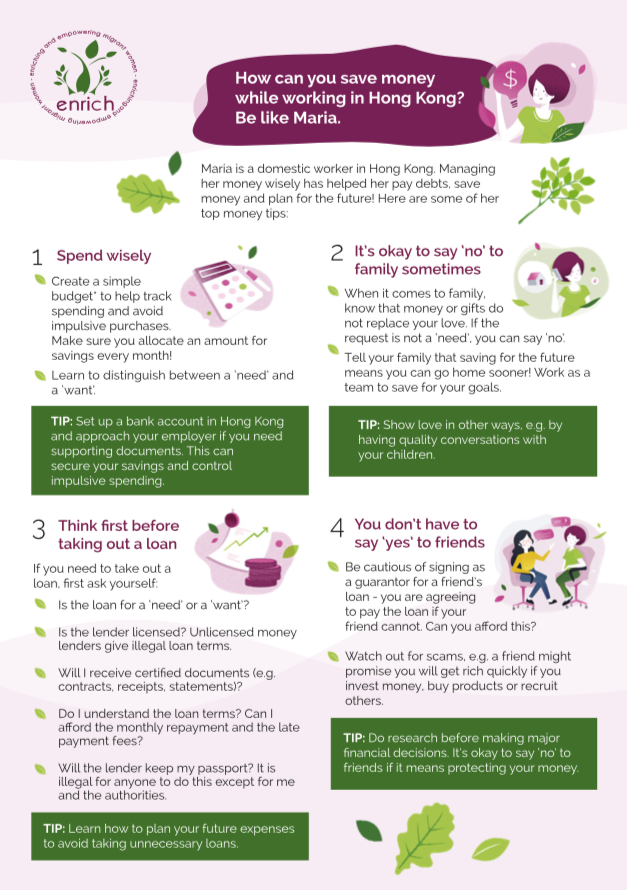
Is my helper allowed to open a bank account in Hong Kong?

Your helper is definitely entitled to open a bank account in Hong Kong and we strongly advise that she does so. However, some banks are not very welcoming to helpers; either they might face discrimination from front-line staff, or they might be asked for many supplementary documents which they do not always have or know how to access. Some of these documents might be easy for you to provide (e.g. proof of address), but your helper might not know whether she can ask you for this. 

For this reason, many employers find it helpful to accompany their helper to open a bank account. The account will not be in your name and will be entirely hers, but your presence can make the process smoother and ensure that she can feel more comfortable to ask you for any necessary documentation. We also advise paying her salary by bank transfer where possible, as this is a good record both for you and her, and will also help her improve her savings, rather than having cash always available on hand. You can even encourage your helper to open a second bank account and have an automatic transfer from her main bank account (where her salary is transferred to) to this second one for savings. 

Although we do not advise any particular bank, you can check out our handy comparison table of different banks and their requirements.

What is the minimum wage and basic entitlements for migrant domestic workers?

According to the Hong Kong Labour Department, the minimum wage for migrant domestic workers is $4,630 HKD for contracts signed on or after 28 September 2019. It is illegal for an employer to pay a wage below this minimum amount. It is also illegal for you and your employee to agree on a wage that is less than the minimum wage.

Your employee is entitled to a food allowance of HK$1,121 per month if you do not provide free food. This is in compliance with section 5(b) of the Standard Employment Contract.

By law, migrant domestic workers must work and live at the employer’s residence only and must receive one rest day off per week, paid holidays of seven days per year of service and statutory holidays. They are protected by the same benefits and protection under the Labour Ordinance like any other local workers in Hong Kong.

For information, consult the Labour Department’s helpful Foreign Domestic Helpers website.

I’ve received extra money (lai see/bonus/salary increase)! What’s the best way to use it?

The possibility of receiving extra money, for example a bonus or lai see is certainly one to look forward to! This is a good opportunity for you to grow your savings, add to certain funds that you have budgeted for, or make an important payment. But as much as we want to make sure our hard-earned money is being saved, it is important that we also don’t feel deprived.

Whenever you receive any extra money, your options are always to either spend it, save it or invest it. Let’s explore each one!

Spend it: Spending this money immediately won’t make it last very long, but it could go towards an essential cost. If you have any outstanding debts to pay, prioritise paying off your debts first with this money and reward yourself to freedom from these debts. It could also cover several smaller but necessary expenses like the service fee for your mobile phone or remittance cable charge costs for when you send money home.

Save it: Could you save this money for your long-term goals, such as your children’s education or a large purchase for your home? It could also go towards an emergency fund - it is crucial to have an emergency fund, especially so you can bounce back during a financial crisis (e.g. if you lose your job, or have urgent medical needs).

Invest it: While you put off spending it, why not make the additional money work for you by investing it? Research and carefully consider investment options available. You could also consider investing it in something that could pay off for you or your family’s future, such as in upgrading your existing business or in your own education/skills-training. If you’ve received a monthly salary increase, as opposed to a one-off bonus, investing the extra income could allow you to gain the most out of your earnings (if you’re not in urgent need of spending it). For example, if you put HK$100 per month into an investment instrument with an interest of 6% per year, it could potentially yield over HK$7000 in five years with compound interest.

Don’t forget, try to resist the temptation to indulge in expensive restaurant meals, treats, and sales on your days off - otherwise you’re just spending your extra money in other ways!

Also, remember that although you may receive a good amount of money from lai see or bonuses in some years, that might not always be the case. In times when there is an economic crisis or recession (for example, during the Covid-19 pandemic), you may receive less - if you’ve been ear-marking this money towards a certain goal, make sure you have a back up plan.

I am so worried about my finances and I can’t focus on my work. How can I tell my employer and family?

Firstly, you do not have to manage this alone and help is available. If you are so worried about your finances that it is affecting your work and your relationships with your family/employer, then it is time to seek help. Remember that it is best to seek help from experts and not from your peers or unverified internet sources. Contact Enrich to arrange a free confidential financial counselling session to help work out your finances and come up with a way forward. We remain completely neutral, we do not judge, and we do not promote/endorse any financial products or companies.

If you are worried about telling your family of your financial difficulties, start by approaching a family member who you trust the most and who can be your advocate/supporter at home. Schedule a phone call with your family, prepare for what you will say and explain your situation clearly. At the end of the day, money is not everything and you need to come together to work as a team - this might mean that they have to be more understanding of your situation, as well as disciplined and frugal with their finances in order to support you. 

If you feel comfortable, and if your employer is open to it, you could have an open conversation with your employer about your financial plans and difficulties, including your goals, debts or worries. Assure them that you are seeking a solution so that you can continue to focus on your work and not be distracted by stress. This might help clear any misunderstandings with your employers and also help them feel more comfortable in communicating with you about this issue. 

If your feeling of stress or anxiety persists, or if you are having suicidal thoughts, help is available. Call +852 2896 0000 (24 hour hotline) for The Samaritans Suicide Crisis Intervention Centre, available in multiple languages. 

I feel guilty being away from my children but how do I tell them I can’t afford to send them money/gifts all the time?

To begin with, it’s important to maintain regular communication with your family while you’re away. Make sure you have regular open discussions about finances, but also remember that the conversation should not always be about money, as this can be stressful and can lead to unhealthy family relationships.

It is hard to deal with the guilt of being so far from your children, but remember that money or gifts do not replace your love. Children learn from our behaviour. If you keep sending money or gifts, whether it is needed or not, the lesson they will learn is that it is easy to get money if they ask. If you go on big shopping sprees when you visit home, whether you can afford it or not, the lesson they will learn is that when you come home it means they can shop more. You can still show your love for them but you can lead by example and gently educate them about the value of your money. 

You could show your love in other ways - by having quality conversations with them, showing an interest in their hobbies or passions, or giving them thoughtful, homemade presents that they can cherish. 

You can also share with them what you are learning about financial education, so that they can understand how to save and prepare for their futures, and how to work with you as a team to achieve your goals together. Get them invested in your goals so they can see a direct connection between saving money and having you home to be with them sooner.

Doing this is a long-term investment in their future too, by gifting them essential skills and knowledge, rather than a one-off show of wealth (e.g. new shoes, mobile or iPad). 

My family think that I am making so much money in Hong Kong and I don’t know how to manage their expectations.

It’s important to maintain regular communication with your family while you’re away. Make sure you have regular open discussions about finances, but also remember that the conversation should not always be about money, as this can be stressful and can lead to unhealthy family relationships.

It is best to be transparent and honest with your family about your life in Hong Kong. Be realistic with them and explain your circumstances from the start. You probably don’t want them to worry about you, but being honest at the beginning can help avoid misunderstandings later on and will help them understand your difficulties. 

Share with your family what you are learning about financial education. Tell them about your financial goals and get them on board to work as a team so you can achieve them together. After all, saving for the future means you can go home and be with them sooner!

Attend our Money and Family workshop to learn more about how to talk to your family about your finances.

The money lender/collecting agent is threatening to call my employer. What do I do?

If the behaviour is violent or potentially a threat to you or your employer, report the loan shark/collecting agent to the Hong Kong Police (999).

Remember to keep calm and do not let insults or threats put you down. 

Contact us immediately for a free confidential one-to-one financial counselling session to receive impartial financial advice. Our counsellors speak English, Tagalog or Bahasa Indonesia. We do not lend money. We only provide neutral advice. You do not have to deal with this on your own. Seek help as soon as possible.

If you feel you can, have an open conversation with your employer about your situation and let them know that you are facing harassment from loan shark. Understand that this might be worrying for them, especially if they were not aware of your financial difficulties beforehand. Reassure them that you are taking action to prevent the money lender/collecting agent from harassing you further. Should your employer have any questions, they can always contact Enrich to receive guidance. 

How often should I remit money?

Ultimately, the decision of how often to remit is up to you, based on what works best for you and your family. Remember that when you remit money, you will be charged cable fees and maybe other service fees every single time, which are an added expense. For example, if you remit the money once a month, you will be charged those fees monthly, but if you are remitting more regularly, you will end up paying a lot more over time only on cable fees.  

Talk to your family about the best arrangement. Having a clear budget that you agree on together will help ensure that they are spending as planned and that they won’t run out of money before you send your next remittance. If you would like them to be a bit more disciplined, ask them to send you receipts for how the money is spent and be firm about sticking to your remittance date (i.e. not sending money earlier if they overspend). This allows them to also become responsible managers of your hard-earned finances - and teaches them financial literacy! 

Always remember that you don’t have to send home all your money - instead, carefully consider their needs and budget accordingly, setting aside your own savings first. If the request is not a ‘need’, it’s okay to say ‘no’ to your family sometimes. After all, saving for the future means you can go home to be with them sooner!

Attend our Money and Family workshop to learn about how to talk to your family about money and involve them in working towards your goals.

What do I do if a remittance company loses my money?

Whenever you send money home, make sure to keep a record of all receipts/tracking numbers. If you have remitted money to your family which has not been received after a reasonable amount of time, stay calm and do not panic. Here are some steps you can take:

  • Contact the remittance company to find out what the issue might be. 

  • File a complaint with the remittance company to claim back your money, including your cable charge. 

  • If the remittance company refuses to return your money, you can file a formal complaint to the Customs and Excise Department (C&ED) which manages all money service operators (like remittance/money transfer companies). Call their 24-hour hotline +852 2543 4942 or email [email protected].

  • You may wish to file a claim through the Small Claims Tribunal (for amounts of HK$75,000 or less). Seek legal advice from charities HELP for Domestic Workers or Mission for Migrant Workers, or visit a district office of the Duty Lawyer Service for free legal support.

Which is the best company to remit money for my family back home?

There are several things to consider when deciding on a remittance company:

  • Exchange rate: shop around and check for the best possible exchange rate you can get for your hard earned money.

  • Cable charge/fee: check for the lowest charge per remittance, and if possible remit only once a month to save on this cost.

  • Accessibility: You may need to check how much it will cost you to remit money to certain areas in your country. Take into account and calculate the cost difference when you factor in transportation expenses and other miscellaneous expenses. The same applies for your family members who will receive the money.

  • Security: Ensure that you remit money through legitimate and secure channels to avoid losing it along the way. Only remit money through reputable/credible companies.

  • Always request a 'printed official receipt' on the spot upon handing over the money for remittance. If you are using an online remittance tool or app, keep a screenshot or record of the transaction on your phone or laptop.

Although we do not recommend any particular companies, here is a comparison of different remittance companies and tools so that you can make your own decision about the best option for you.

Bank Mandiri Remittance
Mode
Physical shop
Transfer destination
Indonesia
Transfer/Receiving methods available
Credit to Bank Account
Cable Charges (as of July 2019)
HKD30
Documents Required
For amounts less than HKD8,000: HKID/Passport For amounts more than HKD8,000: HKID/Passport, proof of address, proof of source of fund
Transfer time
Same day or the next business day if transfer happens on weekend
Chandra
Mode
Physical shop
Transfer destination
Indonesia
Transfer/Receiving methods available
Credit to Bank Account
Cable Charges (as of July 2019)
HKD30 - HKD40
Documents Required
For amounts less than HKD8,000: HKID/Passport For amounts more than HKD8,000: HKID/Passport, proof of address, proof of source of fund
Transfer time
Immediately, but over HKD8,000 is 1 business day
Bank BNI Remittance
Mode
Physical shop and via ATM (for BNI account holders only)
Transfer destination:
Indonesia
Transfer/Receiving methods available
Credit to Bank Account
Cable Charges (as of July 2019)
HKD35
Documents Required
For amounts less than HKD8,000: HKID/Passport For amounts more than HKD8,000: HKID/Passport, proof of address, proof of source of fund
Transfer time
Same day or the next business day if transfer happen on weekend
Bank BRI Remittance
Mode
Physical shop
Transfer destination
Indonesia
Transfer/Receiving methods available
Credit to Bank Account
Cable Charges (as of July 2019)
HKD35
Documents Required
For amounts less than HKD8,000: HKID/Passport For amounts more than HKD8,000: HKID/Passport, proof of address, proof of source of fund
Transfer time
Same day or the next business day if transfer happen on weekend
Bank Central Asia
Mode
Physical shop
Transfer destination
Indonesia
Transfer/Receiving methods available
Bank transfer
Cable Charges (as of July 2019)
HKD40 - HKD 50
Documents Required
For amounts less than HKD15,000: HKID and proof of address For amounts more than HKD15,000: HKID/Passport, proof of address, proof of source of fund
Transfer time
Same day
iRemit
Mode
Physical shop
Transfer destination
Philippines
Transfer/Receiving methods available
Bank transfer; Cash pick-up
Cable Charges (as of July 2019)
HKD20-HKD28
Documents Required
For amounts less than HKD8,000: HKID/Passport For amounts more than HKD8,000: HKID/Passport, proof of address, proof of source of fund
Transfer time
1 hour
Hatari
Mode
Online/Physical shop
Transfer destination
Philippines
Transfer/Receiving methods available
"Credit to Bank Account; Cash pick-up"
Cable Charges (as of July 2019)
HK$ 22
Documents Required
HKID
Transfer time
Within minutes
WorldRemit
Mode
Online
Transfer destination
Philippines Indonesia
Transfer/Receiving methods available
Credit to Bank Account; Mobile transfer; Cash pick-up
Cable Charges (as of July 2019)
HKD25
Documents Required
Passport, HKID and Proof of Address
Transfer time
Within minutes and up to 2 business days depending Transfer/Receiving Method
UAE Exchange
Mode
Online/Physical shop
Transfer destination
Philippines, Indonesia
Transfer/Receiving methods available
Cash or Bank transfer; Cash pick-up
Cable Charges (as of July 2019)
HKD 20
Documents Required
HKID Card, Passport and Address Proof. Need to personally visit them once.
Transfer time
1-2 business days
WeRemit / WeChat Pay
Mode
Online
Transfer destination
Philippines, Indonesia
Transfer/Receiving methods available
Cash top-up; Bank transfer; Cash pick-up
Cable Charges (as of July 2019)
None
Documents Required
HKID Card and need to verify WeChat App on your mobile
Transfer time
1-6 business days.
EMQ
Mode
Online
Transfer destination
Philippines, Indonesia
Transfer/Receiving methods available
Bank transfer; Mobile transfer; Cash pick-up
Cable Charges (as of July 2019)
HKD 20
Documents Required
HKID Card, Passport and Photo (Selfie). Might need to provide salary information for transferring big amounts.
Transfer time
1-2 business days.
Western Union
Mode
Physical shop
Transfer destination
Philippines, Indonesia
Transfer/Receiving methods available
Credit to Bank Account; Cash pick-up
Cable Charges (as of July 2019)
HKD 3.59
Documents Required
HKID
Transfer time
Within minutes and up to 1 business days
InstaRem
Mode
Online
Transfer destination
Philippines, Indonesia
Transfer/Receiving methods available
Bank transfer
Cable Charges (as of July 2019)
0.25% - 1%
Documents Required
HKID card, Address Proof and Passport.
Transfer time
1-2 Business Days
TransferWise
Mode
Online
Transfer destination
Philippines, Indonesia
Transfer/Receiving methods available
Credit to Bank Account
Cable Charges (as of July 2019)
Depends on the amount. Check their calculator on the website.
Documents Required
No documentation required. Sender needs to have a HK bank account and receiver needs to have a bank account in the destination country.
Transfer time
4 hours
Subscribe to
Whatsapp Whatsapp